
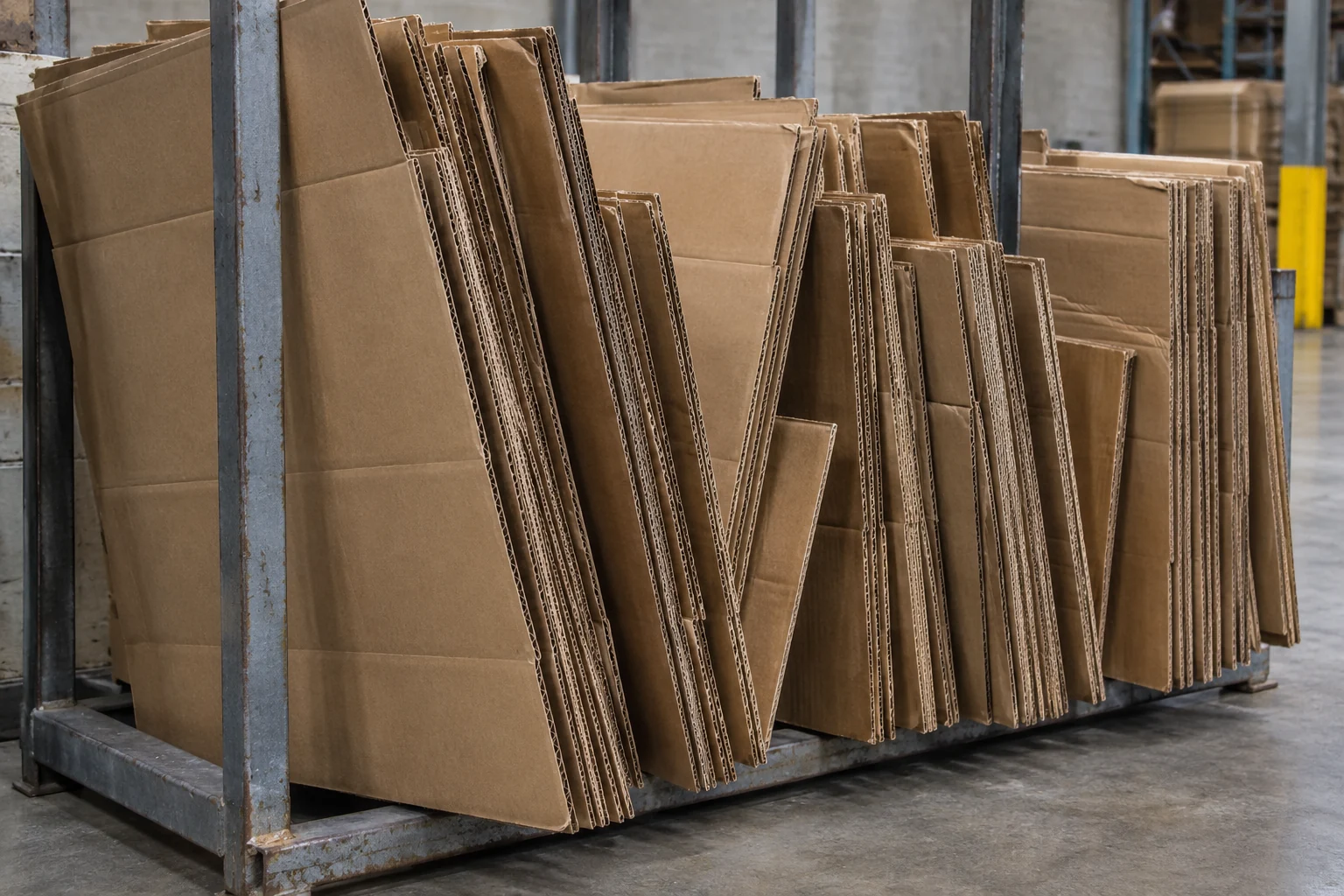
corrugated reuse
Cardboard Shredder Cost and Reuse Economics
Estimate the value of cardboard reuse using usable yield, packing labor, changed consumables and accepted parcels without assumed machine prices.
JOURNAL / COLLECTION 03
Count the board you can use and the handling it requires.
Explore this collection ↓A PRACTICAL STARTING POINT
Reuse begins at the receiving area. Clean, dry corrugated cartons can be a useful material stream; unsuitable board and the time spent sorting it still belong in the calculation. Do not treat every incoming box as available cushioning, or every kilogram processed as purchased fill avoided.
Compare equivalent packing work. Record accepted parcels, their product mix, the fill they would otherwise consume and the labor required by each method. Keep the value of material savings separate from labor capacity and waste collection charges. Avoided disposal cost only changes when the actual waste contract or collection pattern changes.
The economics guide gives a blank worksheet and equations without assigning a universal machine price or payback period. Pair it with the cushioning guide to ensure the comparison uses an acceptable packout. If reused board increases carton size, storage or rejected packs, include those effects before claiming a saving.
Log usable yield and keep a fallback material.
Check labor, storage and accepted-parcel denominator.
Reassess protection and parcel size together.
Use Cardboard Shredder Cost and Reuse Economics to estimate the value of cardboard reuse using usable yield, packing labor, changed consumables and accepted parcels without assumed machine prices.
READ THE DETAILS