A PRACTICAL STARTING POINT
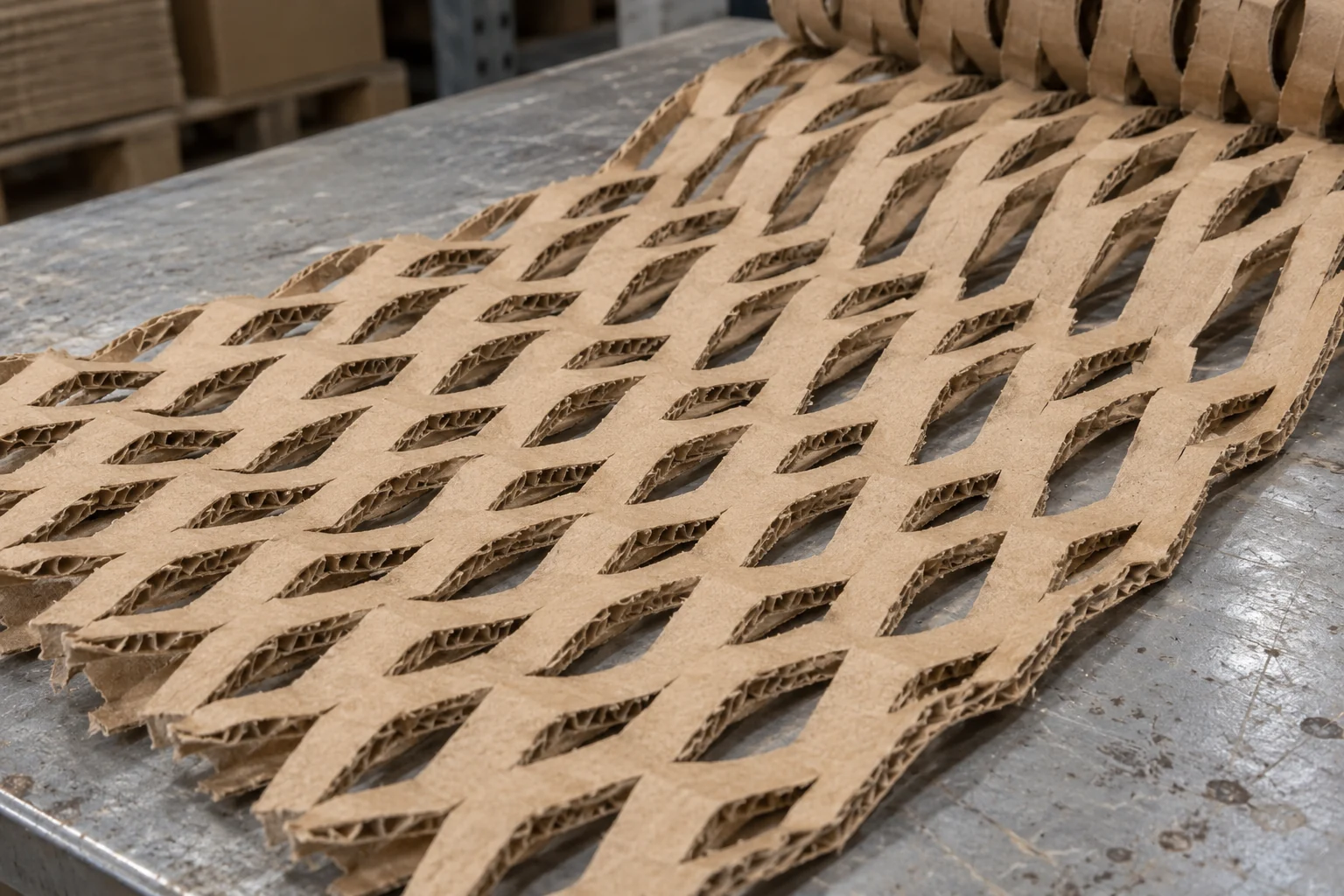
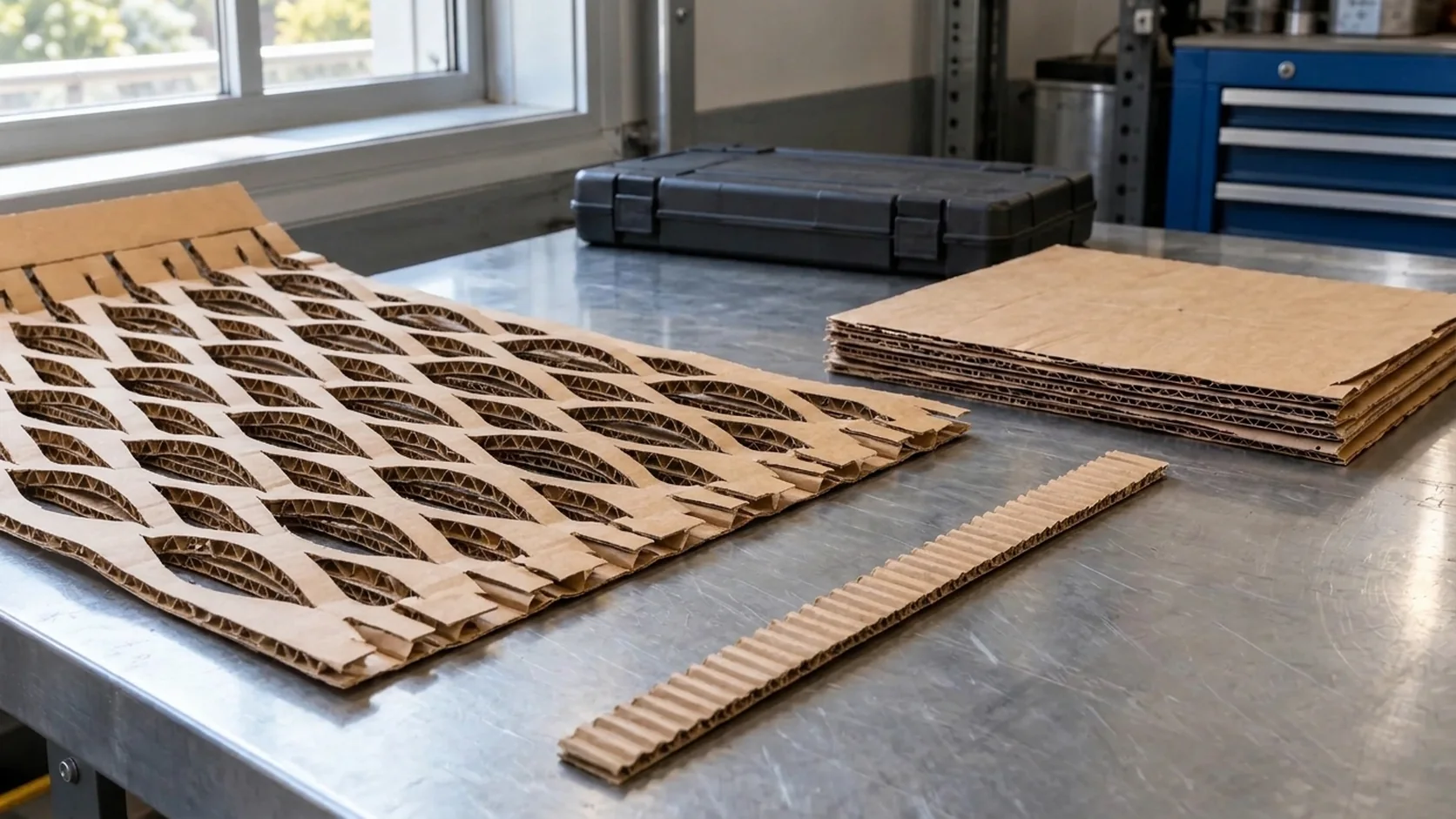
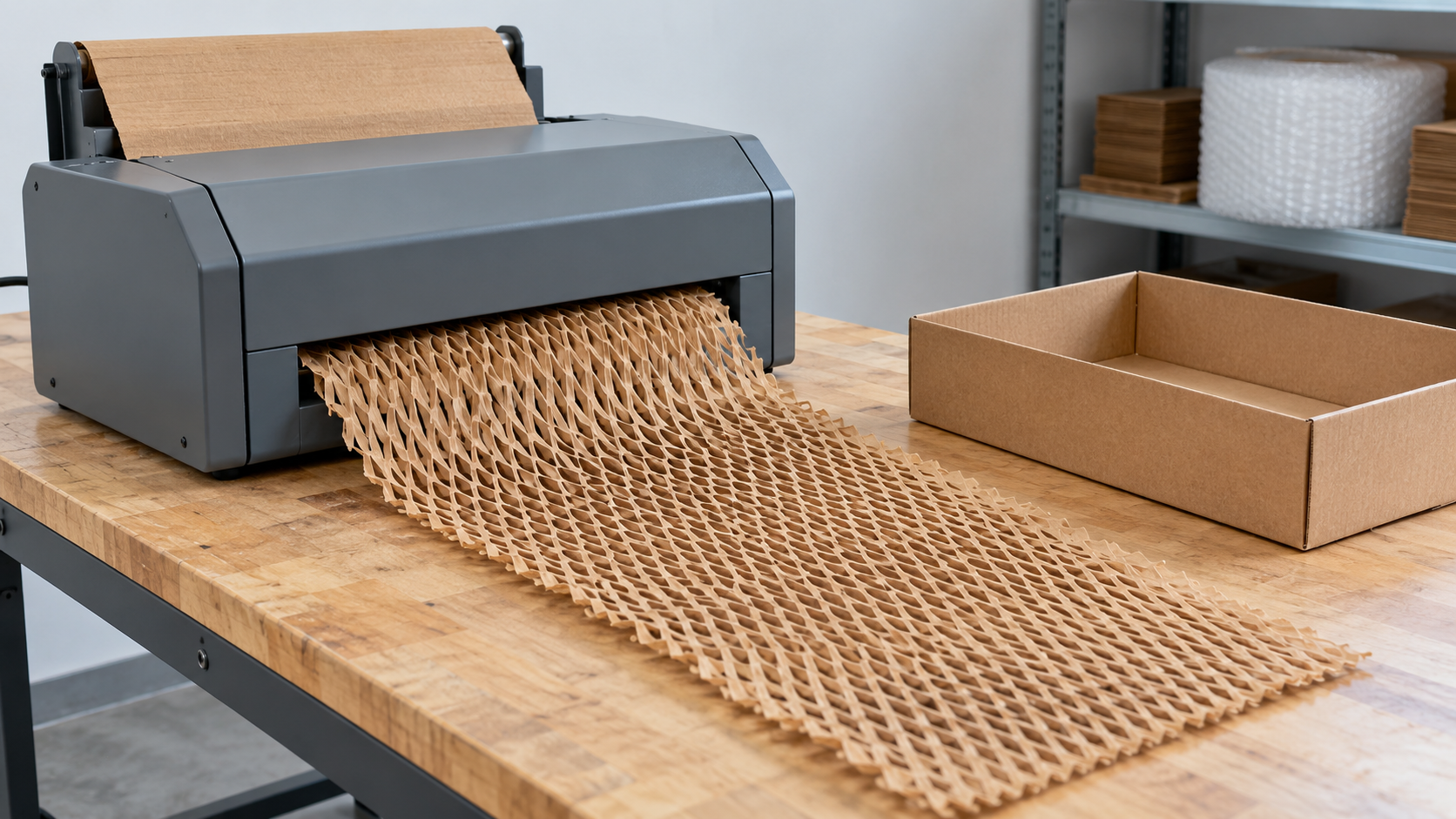
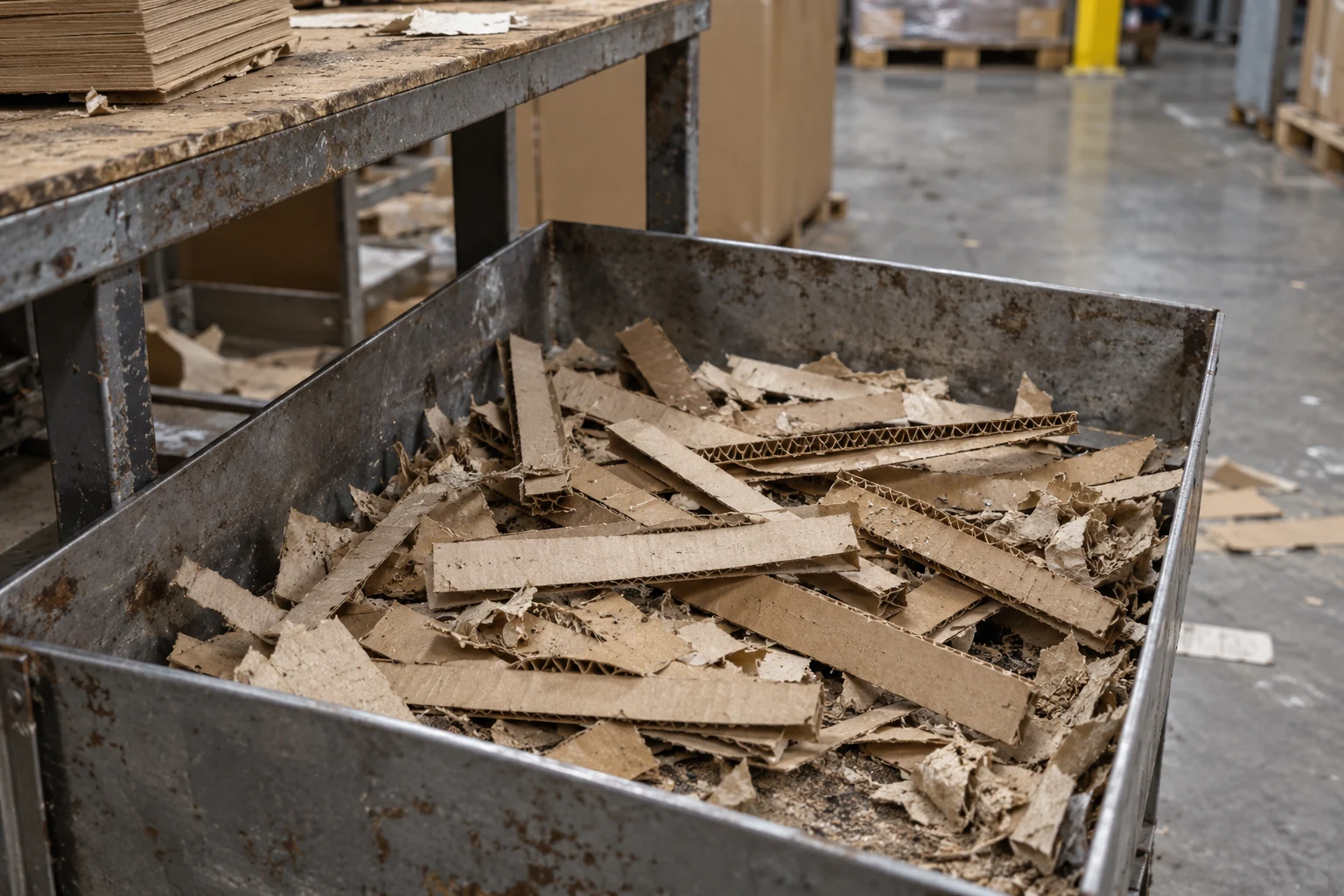
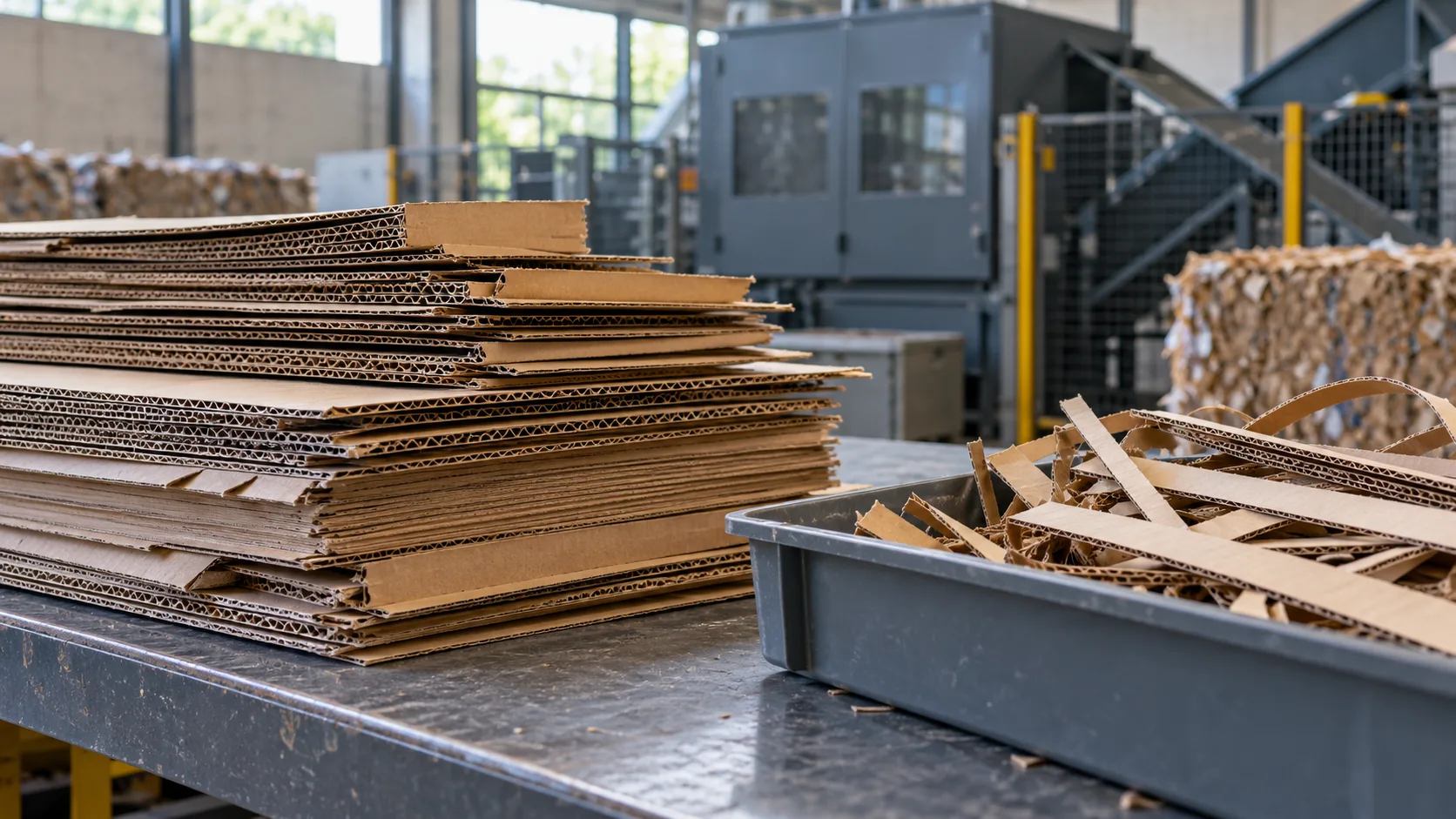
The word shredder can describe machines with very different outputs. Some produce loose pieces; others slit corrugated board into connected mats that open into a cushioning structure. Ask for an output sample made from the board you receive. A name or motor rating will not tell you whether that material can wrap a product or fill its side gaps.
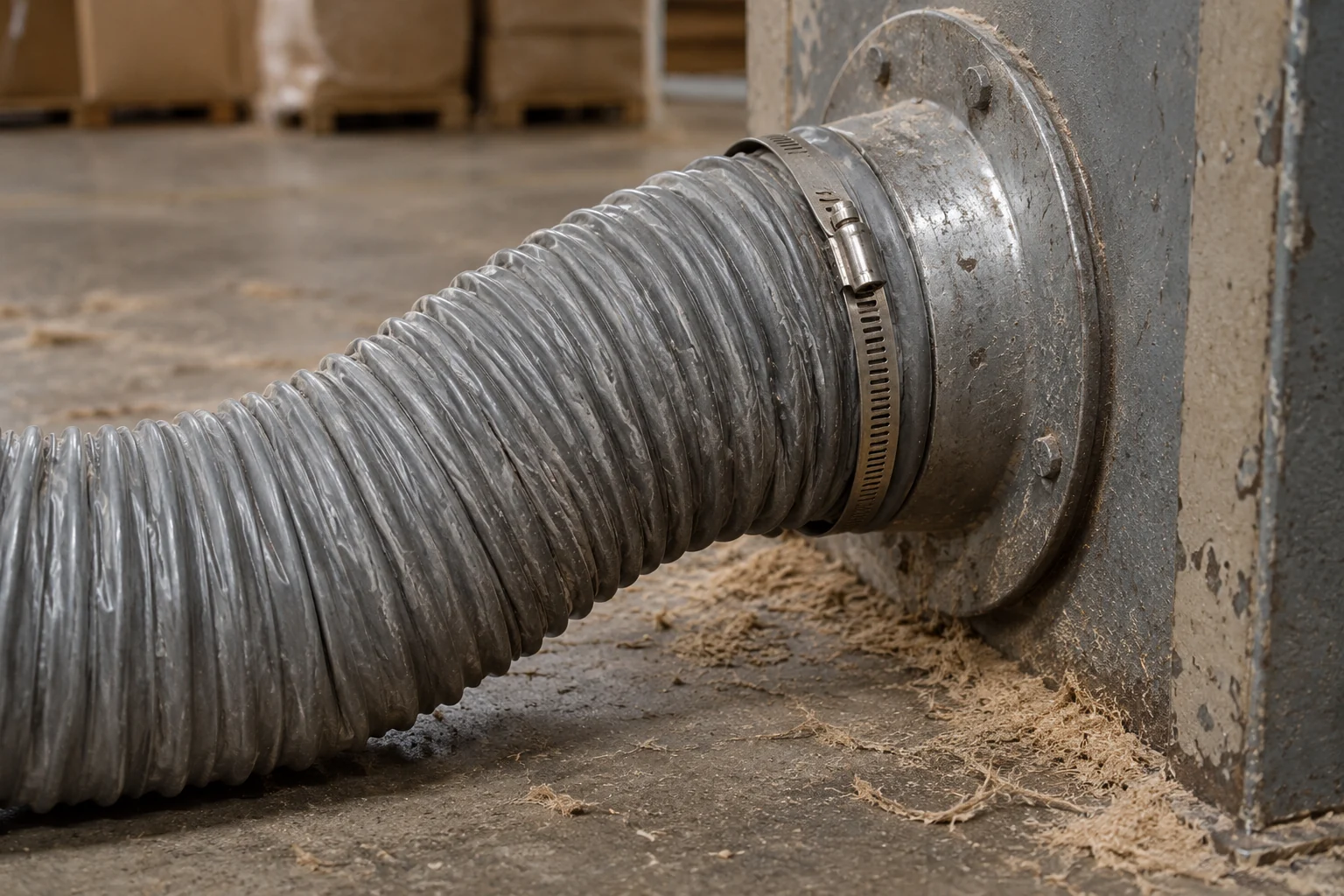
Incoming board, operator access and outgoing material storage belong in the equipment decision. Confirm the exact model, supply requirements and permitted feed in its own manual. An extraction connection may be optional, and a similar-looking machine can use a different control or accessory arrangement.
The comparison guide covers output form. Follow it with the extraction interface guide before arranging the workstation, and keep the maintenance record guide near the machine documentation. The latter links stoppage symptoms and affected output intervals directly to the governing model manual and service schedule.
Choose your next step
01Need a continuous wrap
Request a connected perforated-mat sample.
02Need loose fill
Compare loose output and containment.
03Dust or repeated stoppages
Check the configuration and manual before changing the installation.
Work through the question
Use Cardboard Perforator Cut Pitch, Expansion Ratio, and Pad Yield Calculation to calculate usable cushioning pad area and side-trim offcut strips from a used corrugated carton blank using perforation grid pitch, working width and intake limits.
Use Cardboard Perforator Dust Extraction and Workstation Interfaces to check the documented extraction connection, accessory configuration and workstation layout of a cardboard perforator before choosing a dust system.
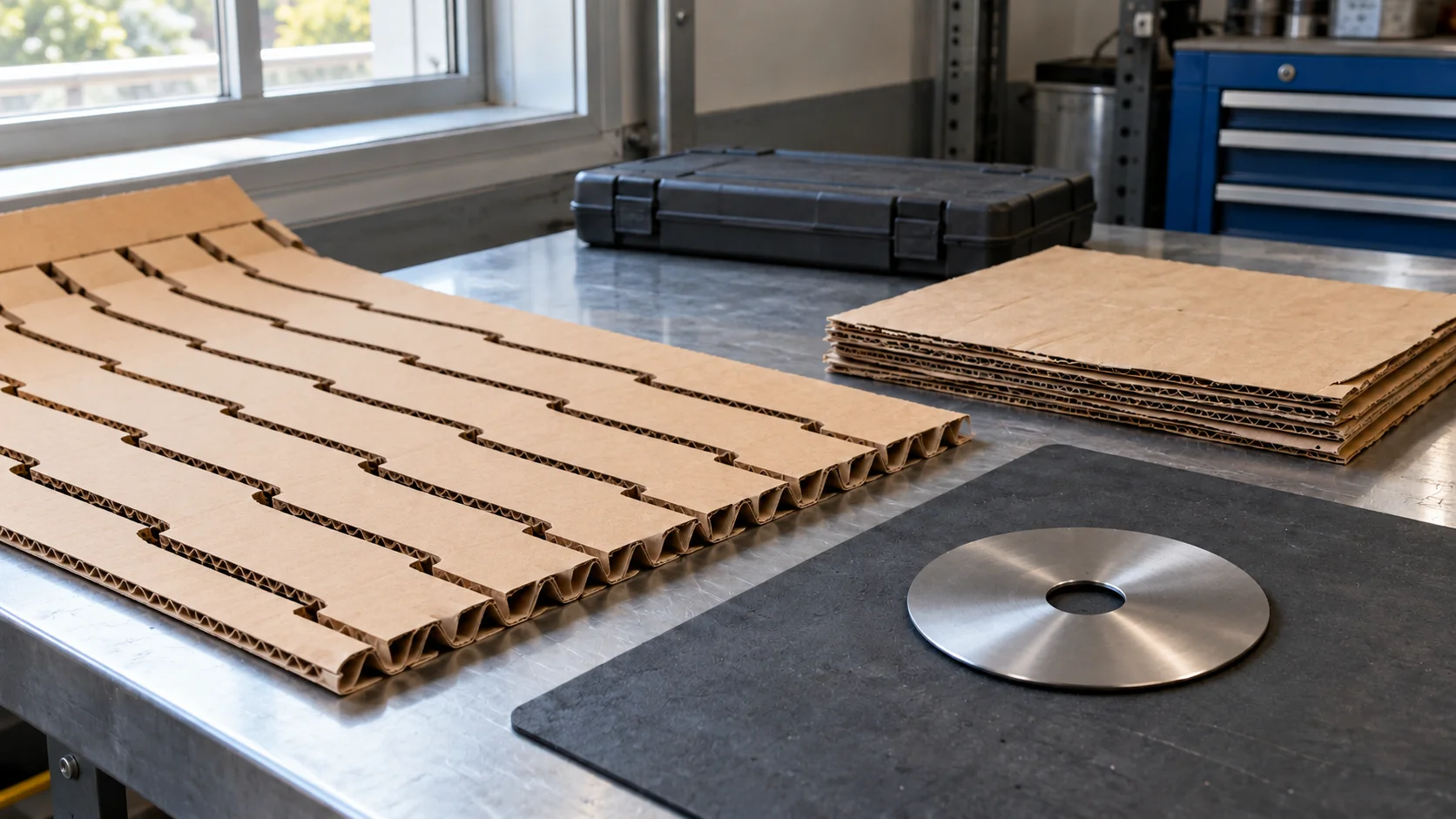
Use Cardboard Shredder Blades: Perforating Rollers, Shear Knives and Wear Limits to identify cardboard shredder blades, separate clearance settings from wear limits, and record cut quality and current before an authorized service decision.
Use Cardboard Shredder Machine Blade Types and Throughput: Width, Layers and Power to compare documented cardboard cutter outputs, independent feed limits and power labels, then calculate useful throughput with an explicit mass balance.
Use Cardboard Shredder Maintenance and Jam Records to keep useful cardboard-shredder stoppage and maintenance records while following the exact model manual for cleaning, isolation and service.
Use Cardboard Shredders vs Perforators for Packaging to choose between loose shredded board and a connected perforated mat by the packing task, material form and a controlled sample trial.
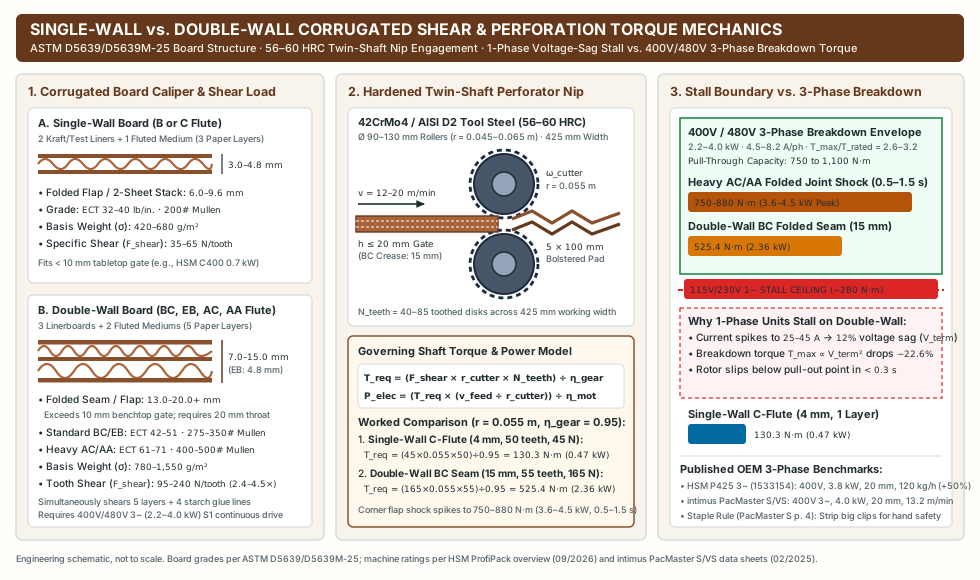
Use Heavy Duty Cardboard Shredder Selection for Double-Wall Boxes to select a heavy duty cardboard shredder for 200+ double-wall boxes/day: 400V 3 phase cardboard shredder torque, S1 thermal duty, gearbox cooling, and heavy duty corrugated perforator dust ports.
Use Single-Shaft vs Double-Shaft Shredder for Corrugated Cardboard: Screen Sizing and Strip Control to compare a single shaft shredder with a double shaft shredder for corrugated cardboard. Plan screen selection, strip checks and a material trial.