
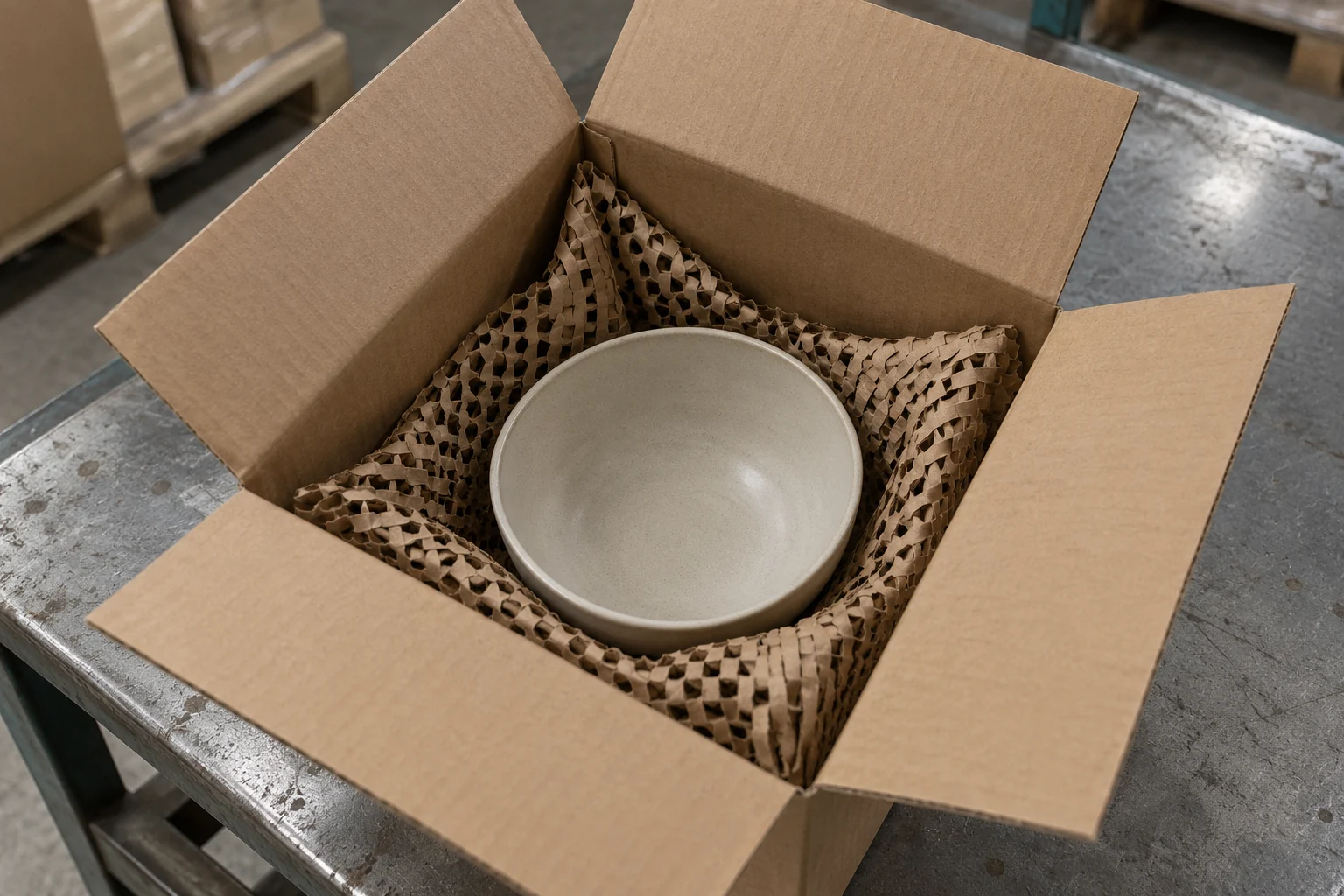
void fill machinery
Cardboard Cushioning: Validate the Material and Packout
Define a repeatable cardboard cushioning packout, product damage criteria and a suitable test brief before replacing an established package.
JOURNAL / COLLECTION 02
Validate the product and packout as a complete system.
Explore this collection ↓A PRACTICAL STARTING POINT
A box that looks full can still allow a fragile item to move or strike the wall during handling. Separate void filling, restraint and cushioning when defining the packing task. The expanded cardboard may occupy a gap, but its appearance alone cannot establish the protection it provides for a particular product.
Write down the product’s vulnerable features, the shipping route and what damage would make the shipment unacceptable. Specify the carton and the way operators place material around the contents. Test representative packs under an appropriate procedure, then retain the assembly instructions with the results.
The cushioning guide below provides a packout record and a test-planning checklist. It also explains why a promising hand-made sample needs a repeatable workstation method. If preparation creates a queue at the packing bench, include the cutting, storage and placement work in the reuse cost calculation before buying additional machinery.
Review restraint and supported clearance.
Define the placement sequence and material form.
Review the test basis and retesting need.
Use Cardboard Cushioning: Validate the Material and Packout to define a repeatable cardboard cushioning packout, product damage criteria and a suitable test brief before replacing an established package.
READ THE DETAILS