
A carton can look full while leaving a fragile feature unsupported. Validate cardboard cushioning with the product, carton, material placement and distribution route defined together.
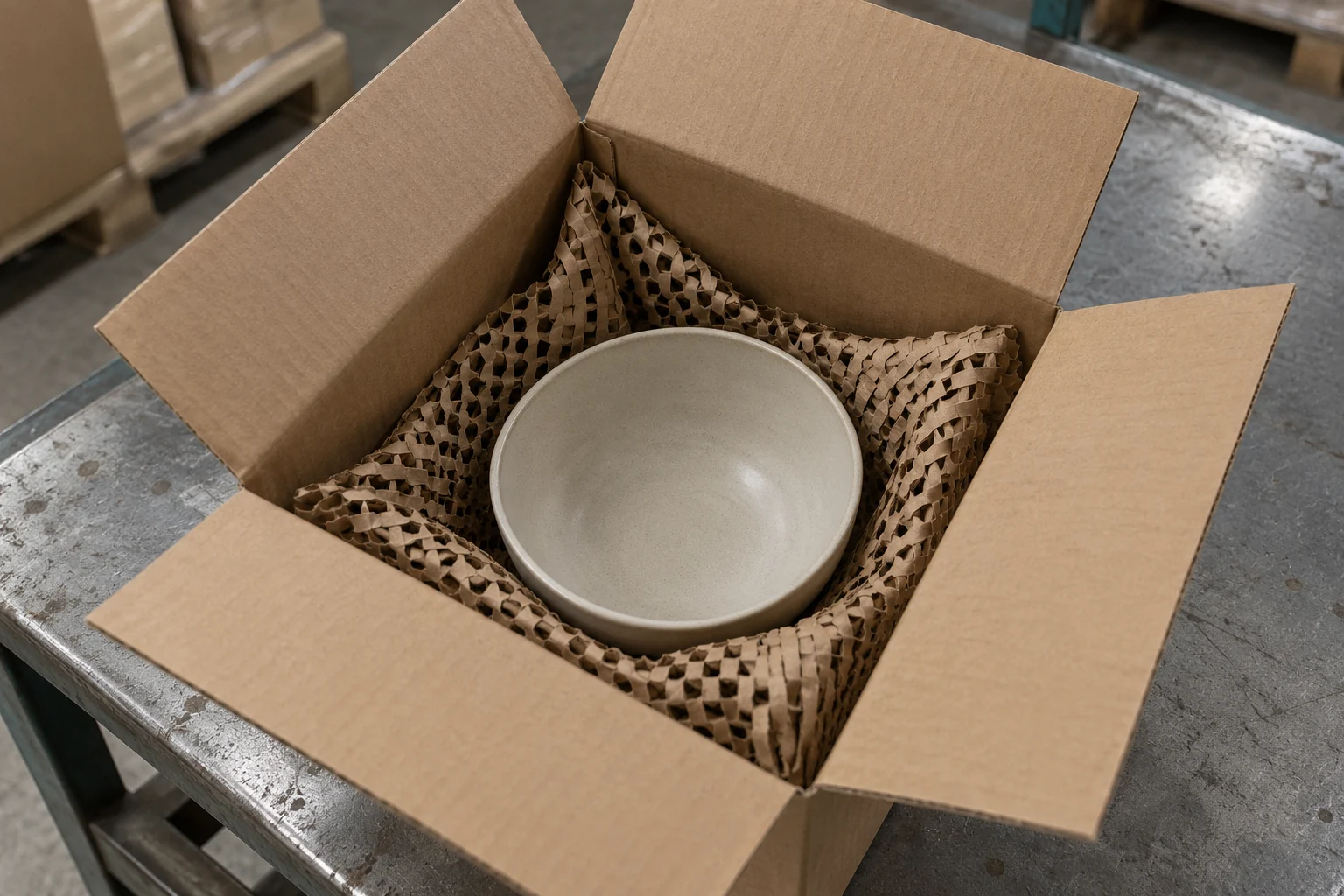
Treat reused cardboard as a candidate packaging material, then test the assembled pack against stated acceptance criteria. Void filling, restraint and cushioning are different tasks. A visual check can confirm the assembly follows instructions, but it cannot establish how the shipment performs during handling.
State what the material must do
Void fill occupies unused space. Restraint limits product movement. Cushioning manages the loads transmitted to the product during handling. One material may contribute to several functions, but the necessary amount and arrangement depend on the item and the complete package.
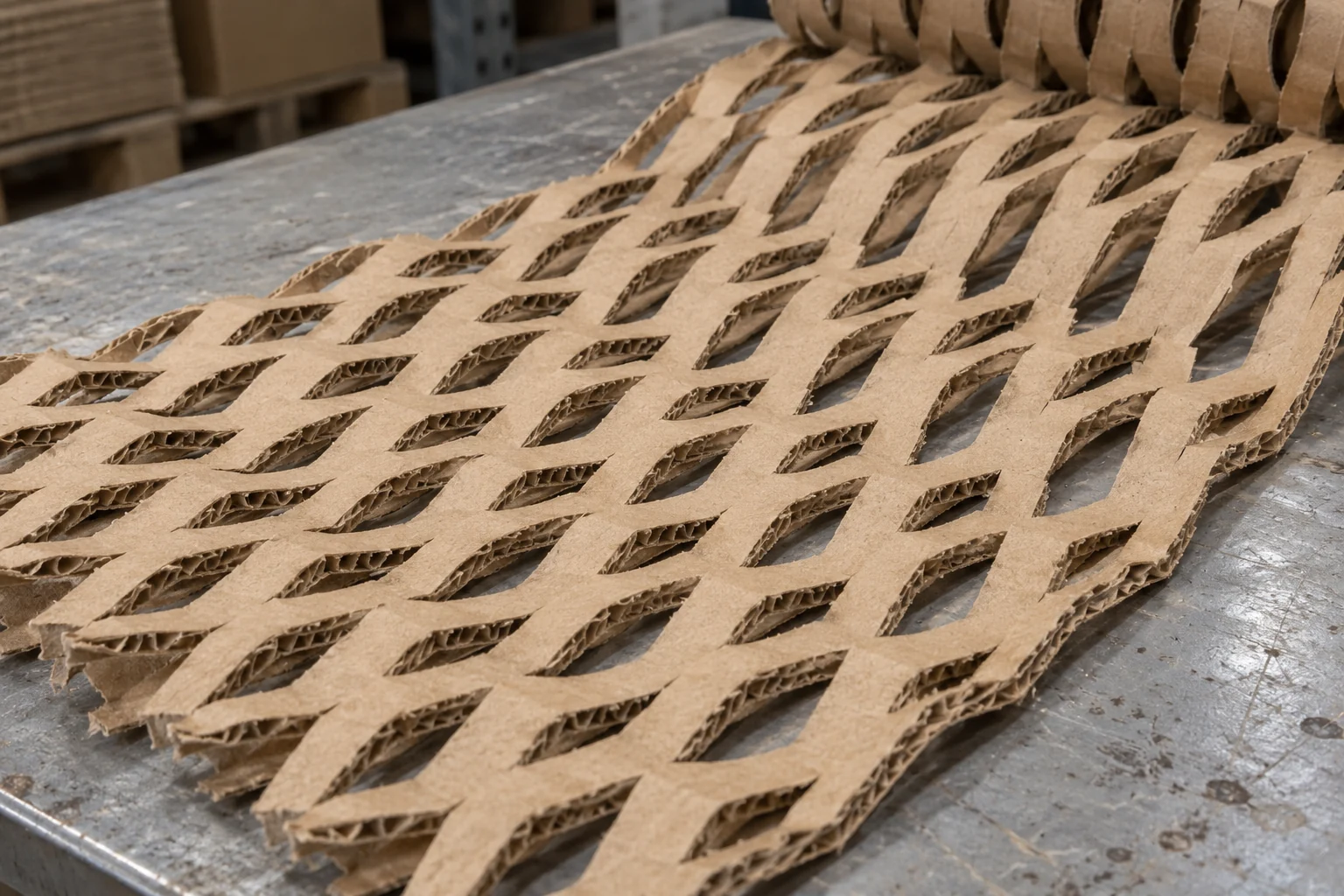
HSM’s ProfiPack overview presents several cardboard output forms for packaging. Its application statements are a starting point for a candidate packout, rather than evidence that a particular fragile item will arrive undamaged.
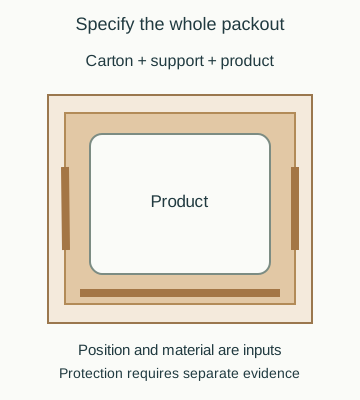
Identify vulnerable corners, projecting features and surfaces that cannot tolerate abrasion. Determine whether the carton must carry stacking loads without transferring them through the product. If the product has several permitted orientations, make those explicit in the packing instruction and test brief.
Make the packout reproducible
Document the board condition and output form, how pieces are folded or expanded, where they are placed, and the carton and closure used. Take reference images that show the bottom layer, side support and final top arrangement before closure. These must be actual trial images when used as a production instruction.
| Packout field | What to specify |
|---|---|
| Product | Identity, mass and vulnerable features |
| Carton | Construction and dimensions from the actual specification |
| Reused material | Source condition, output form and preparation method |
| Assembly | Position, orientation and placement sequence |
| Closure | Tape, adhesive or other actual method |
| Acceptance | Product function, cosmetic damage and package condition |
| Traceability | Trial version, materials, operator and date |
A generic illustration in this article is not a production reference photograph. Build the record from the package you intend to ship.
Choose a test for the decision and distribution route
ISTA’s current test-procedure overview distinguishes integrity screening from general simulations of transport hazards. A screening result can help eliminate weak concepts; it should not be represented as the same evidence as a procedure selected to represent the intended shipment environment.
Write the test question before selecting a protocol: whether a revised pack meets the customer requirement, whether a candidate is ready for further development, or whether a material reduction preserves the required result. Give a qualified laboratory the route, parcel or unit-load format, product details and required acceptance criteria. Obtain the current complete procedure and follow its requirements; the public overview is not an executable test method.
Keep assembly checks separate from performance acceptance
Before testing, check that the specimen matches the recorded packout. After testing, evaluate the product and package using the predetermined criteria. Preserve failures as well as passes, including the location and nature of damage.
If changing the material source, carton, product or assembly, review whether the existing test evidence still applies. A trial using one carefully prepared sample cannot establish the variability of an ongoing stream of used cartons. Agree the sample and repeat-test plan with the responsible technical team.
Bring the result back to the packing bench
Observe ordinary operators reproducing the accepted arrangement with production materials. Record preparation and placement time, difficulty closing the carton and any ambiguous instructions. A pack that requires unrepeatable judgement needs a clearer method before routine use.
Then use the reuse economics worksheet with the accepted method. If you need another output shape, the material-form comparison explains the handling tradeoffs.
Methods and limits
The worksheet is an editorial test-planning aid. This publication has not performed the tests or certified a packout. ISTA’s public overview supports the distinction between test objectives; no proprietary procedure, test level or compliance rule is inferred. Return to void-fill machinery for the wider workstation context. Updated October 2026.