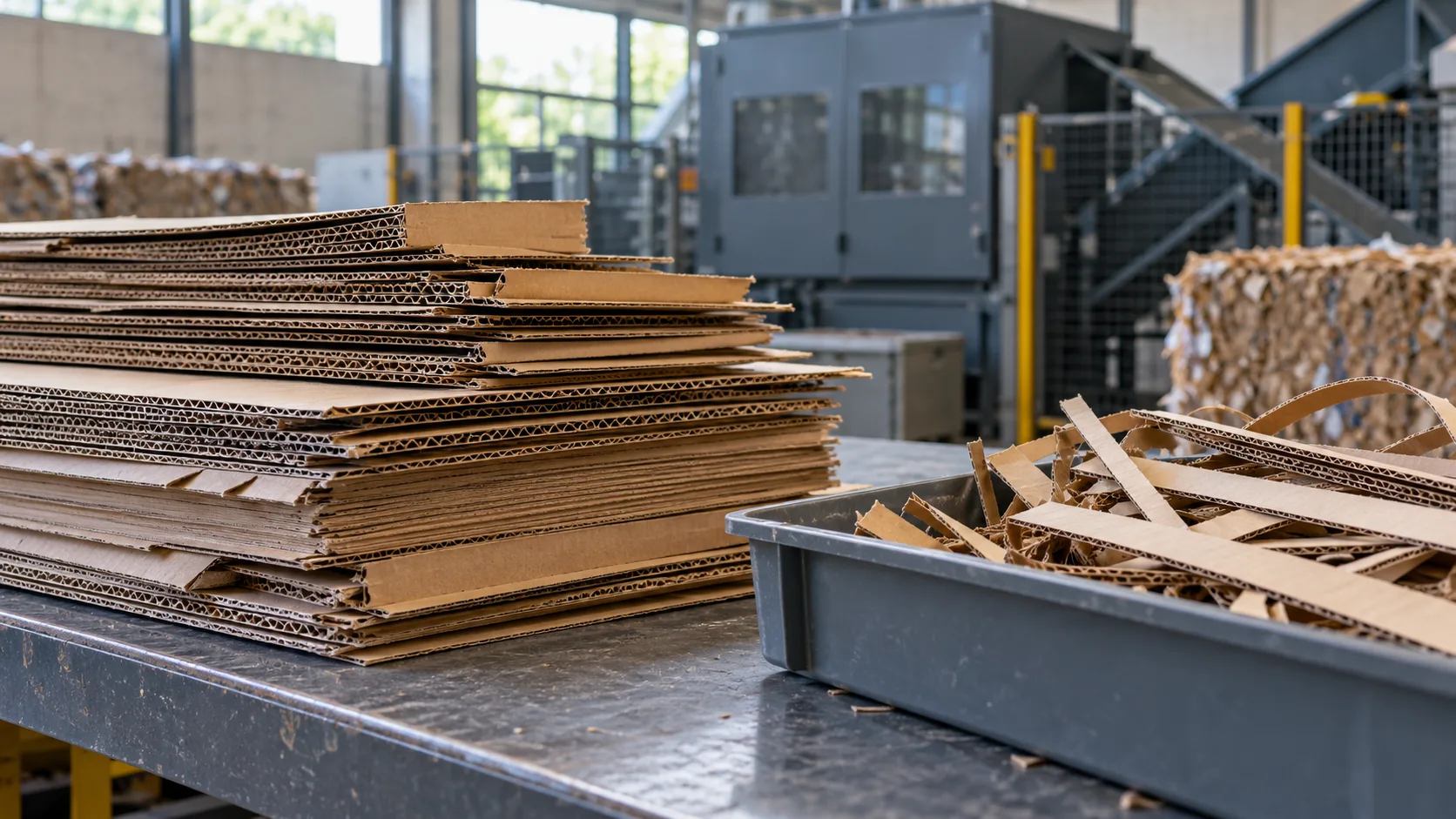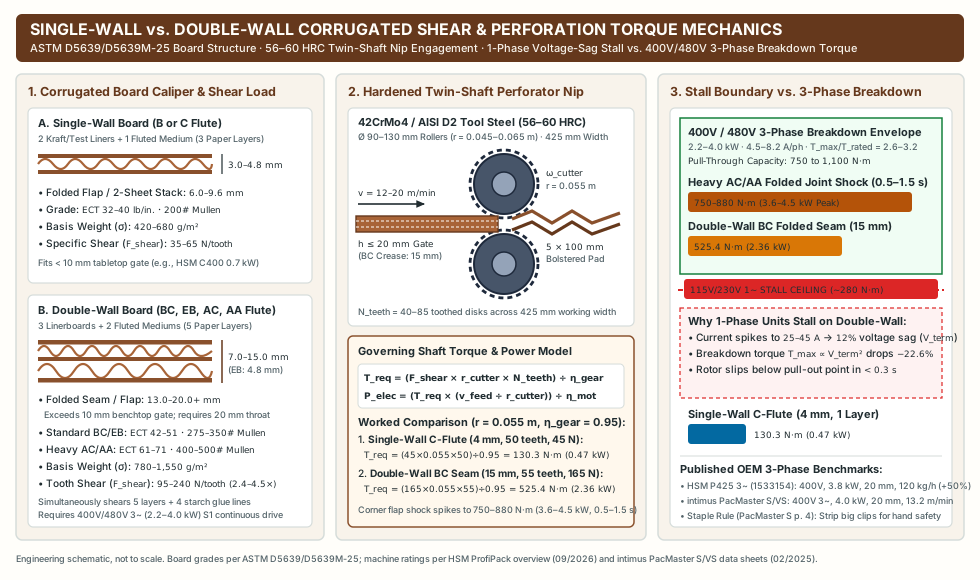
Cardboard shredder blades need assembly-specific wear checks. Identify whether the machine uses perforating rollers, a rotary shear or rotor-and-stator knives before selecting a clearance or replacement limit. A fuzzy cut, a mat that opens poorly or an overload indication calls for investigation; none identifies a worn blade by itself.
For a replacement enquiry, start with the machine model, serial number and cutter part number. “Hook” or “straight” describes too little to establish fit, the cutting interface or the service procedure. Use this guide to distinguish the settings, preserve useful observations and decide what belongs in the service handoff.
Identify the assembly before ordering a shredder knife
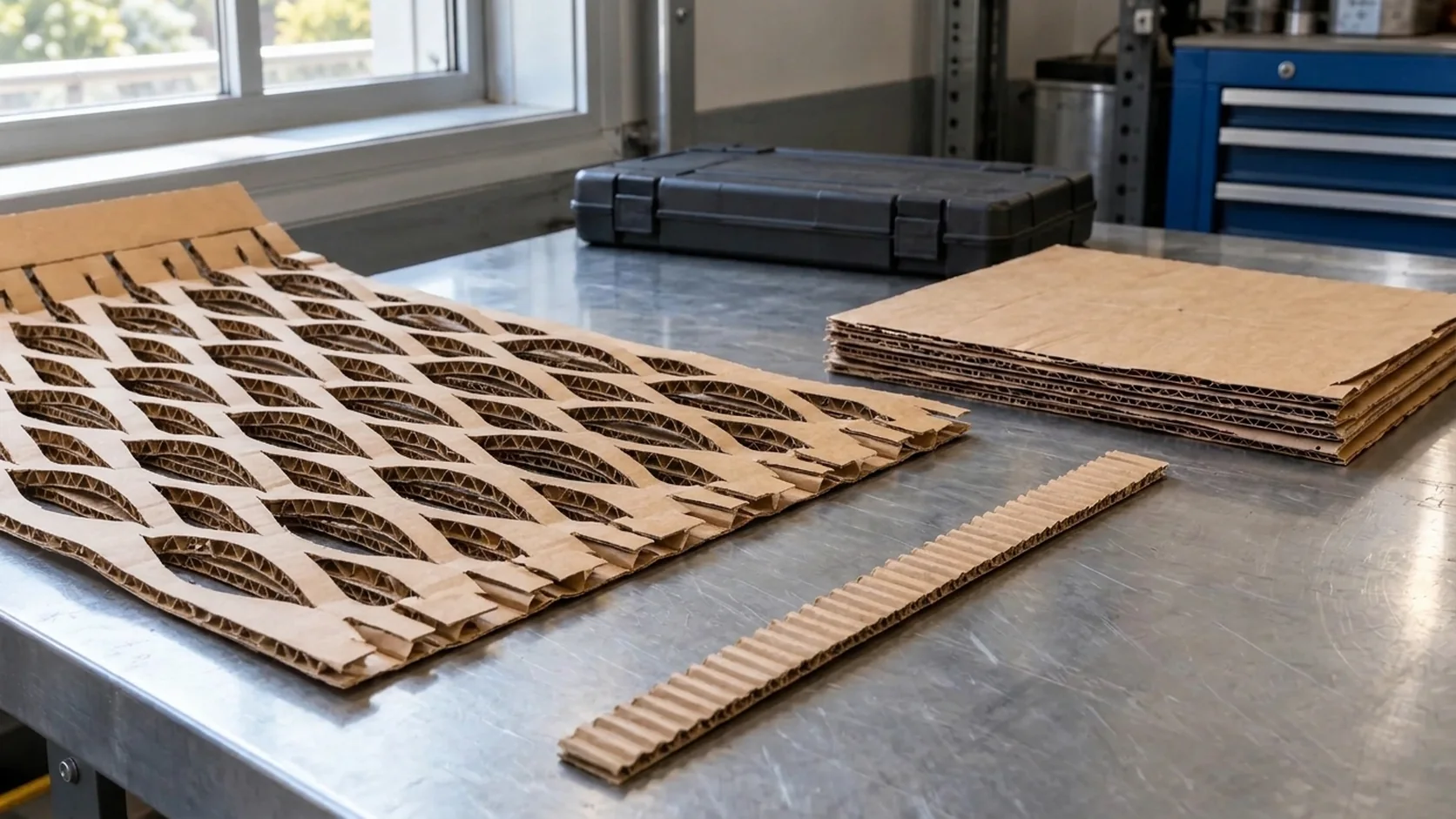
Match the cutter to the machine documentation, then use the output to describe its job. In a cardboard cushion maker, connected material is often intentional. HSM’s ProfiPack product overview, pages 3–4, describes cutting rollers producing flat or bolstered mats, while its ecoChip configuration produces loose chips. The cardboard shredders collection starts with this output choice.
| Cutting assembly | What to identify | What its service check concerns |
|---|---|---|
| Perforating cutting rollers | Roller assembly and part reference for the cushion-making machine | The exact drawing’s tooth/edge condition, measurement locations and service limits |
| Rotary shear knife and anvil | Knifeholder, circular blade and mating anvil ring | Blade diameter, overlap, side force and alignment specified for that holder |
| Rotor and stationary knives | Rotor, stator and matched knife arrangement in a recycling shredder | Rotor-to-stator gap, edge condition and any permitted indexing or regrinding |
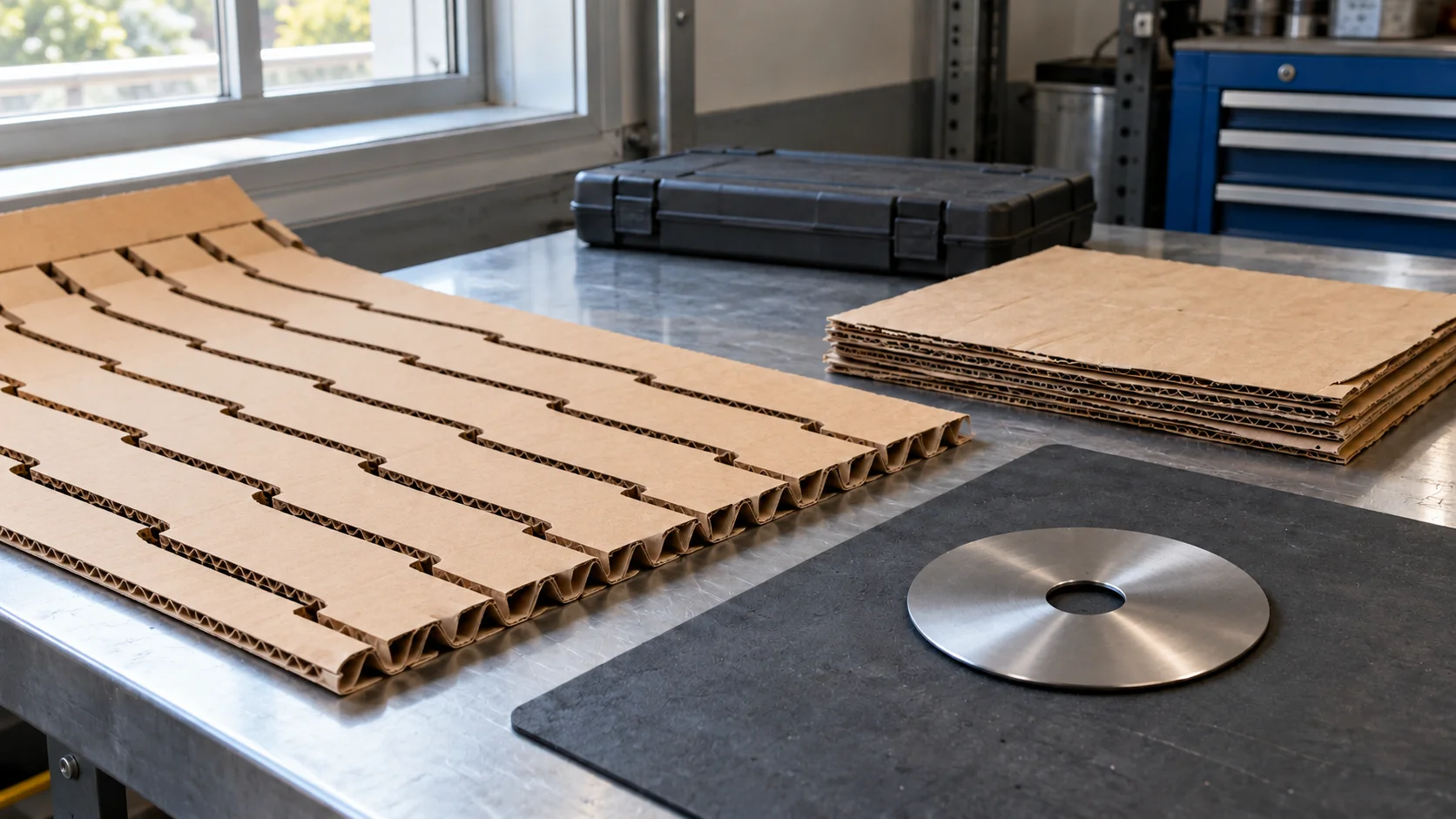
These are separate cutting interfaces. Identify any trim cutter separately from the perforating assembly. If a parts list says “scoring roller,” check the drawing and function before treating it as the perforating cutter. A rotary shear can use a circular knife; “shear” does not mean a straight blade.
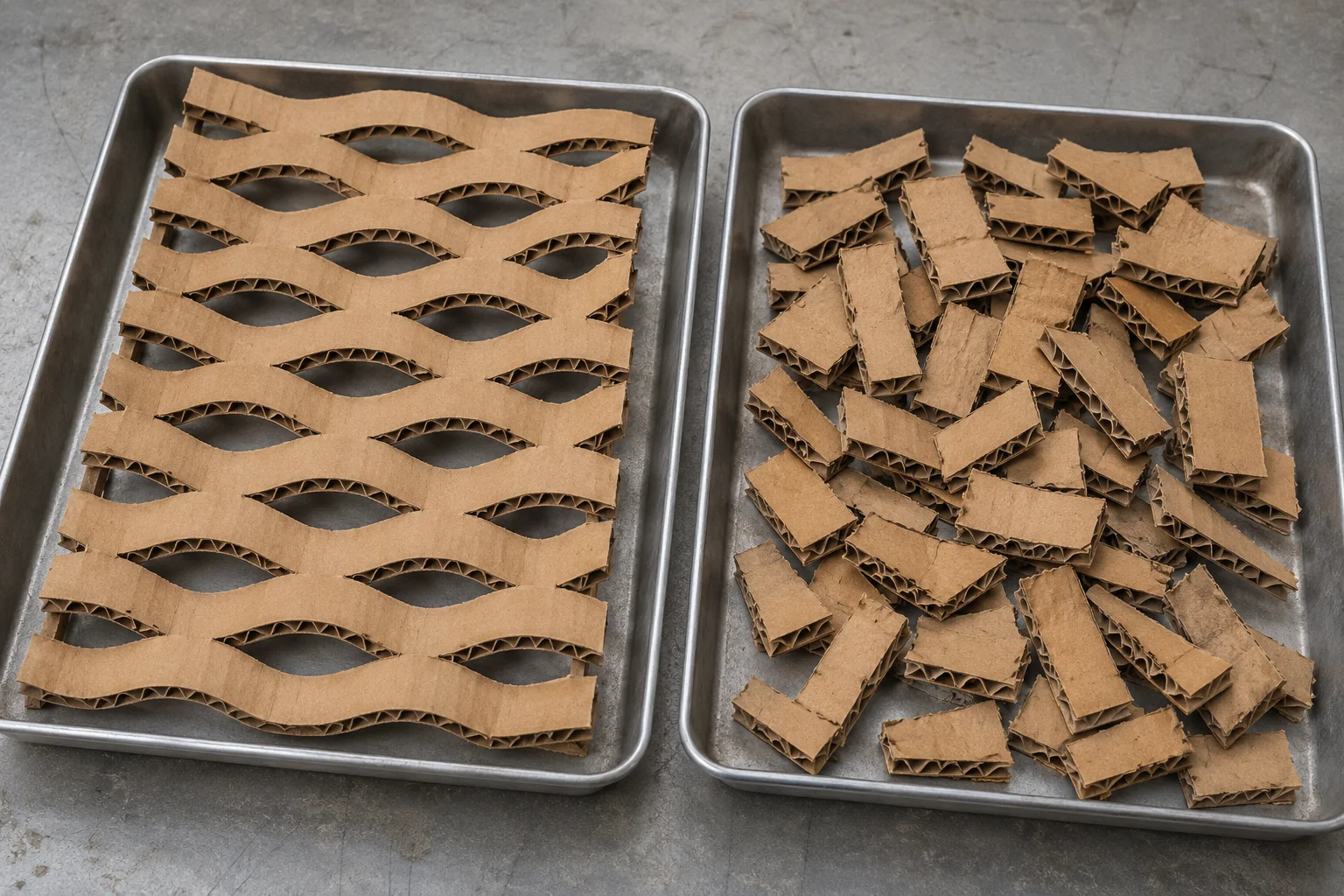
For machine output modes and feed limits, continue with blade types and useful throughput. A mode or output name alone does not identify a replacement part.
Check the setting that belongs to that cutter
Write the interface and measurement location beside every setting. “Blade clearance” without those details can refer to different physical relationships.
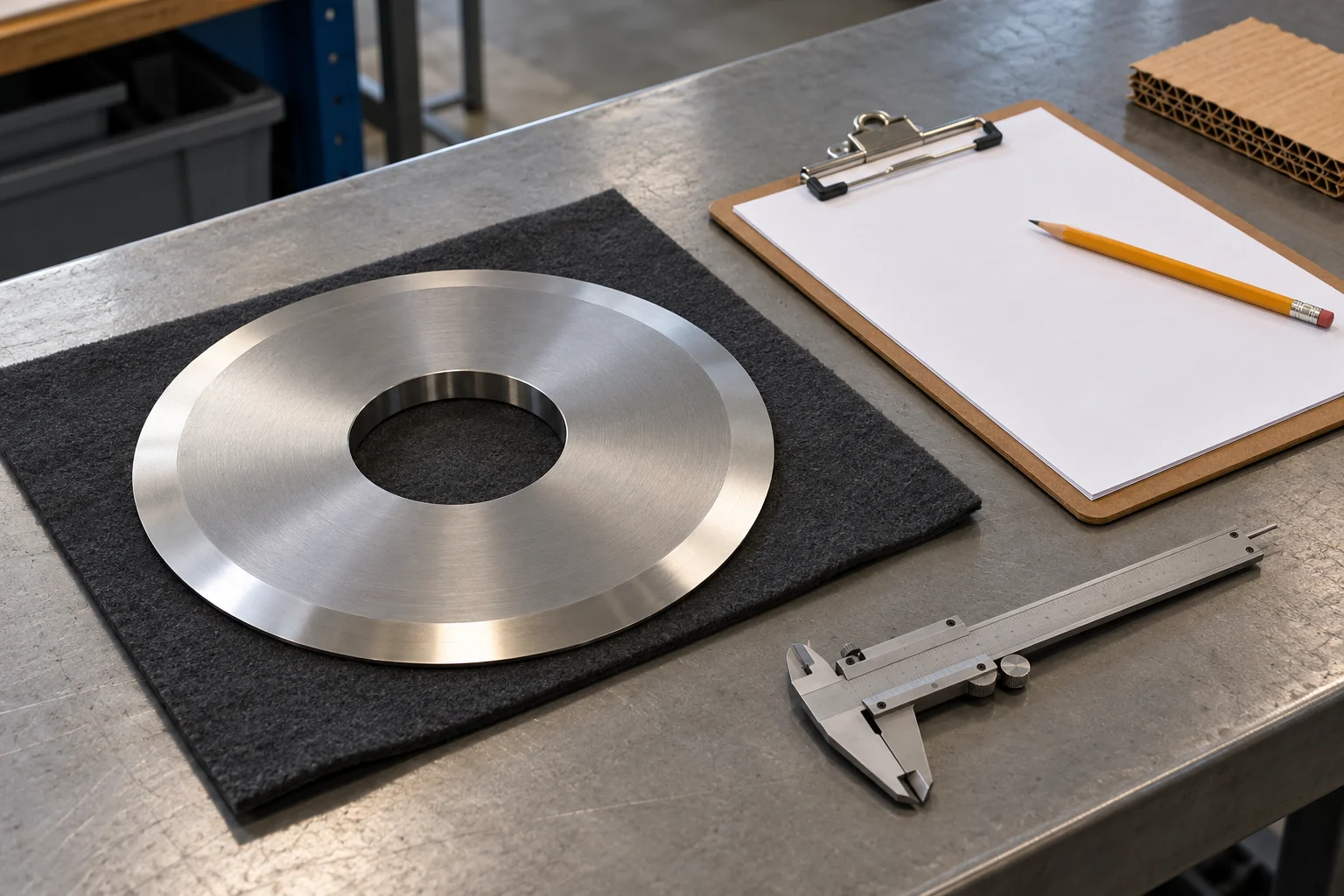
For a rotary shear, overlap describes how far the circular blade extends radially past the anvil’s outer edge in the cutting position. Side force acts laterally at the blade/anvil contact. The Maxcess/Tidland Control Series Knifeholder manual, sections 9-6 and 9-7, treats overlap, side force, cant angle and anvil run-out as separate troubleshooting factors. An overlap setting is not a free axial gap, and a blade-to-guard distance is not a cutting clearance.
For rotor/stator knives, the relevant gap lies between the rotating and stationary cutting edges. The Virtus L60/L85 Operating Manual (2023), section 8.9.10, supplies a gap and adjustment method for that machine family. Transfer the method and value only when the installed model and configuration match the governing instructions.
For cardboard perforating rollers, obtain the assembly’s service drawing and record the specified measuring points, permitted values and measuring method. Establish whether the assembly is field-adjustable or requires specialist service before authorizing work. Its tooth geometry and service criteria determine the check; a rotary-shear setting cannot supply the missing roller tolerance.
The service record should distinguish the measured condition before work from the approved setting after work, with units, drawing revision and technician identification. Operators can gather model details and output observations without opening the cutting assembly.
Read the cut before blaming the blade
Compare output under comparable feed conditions, and record observations separately from suspected causes. Keep an accepted mat sample alongside a current sample made from the same board construction and feed arrangement. Note changes in board condition, folds, layers or operating mode before drawing a wear conclusion.
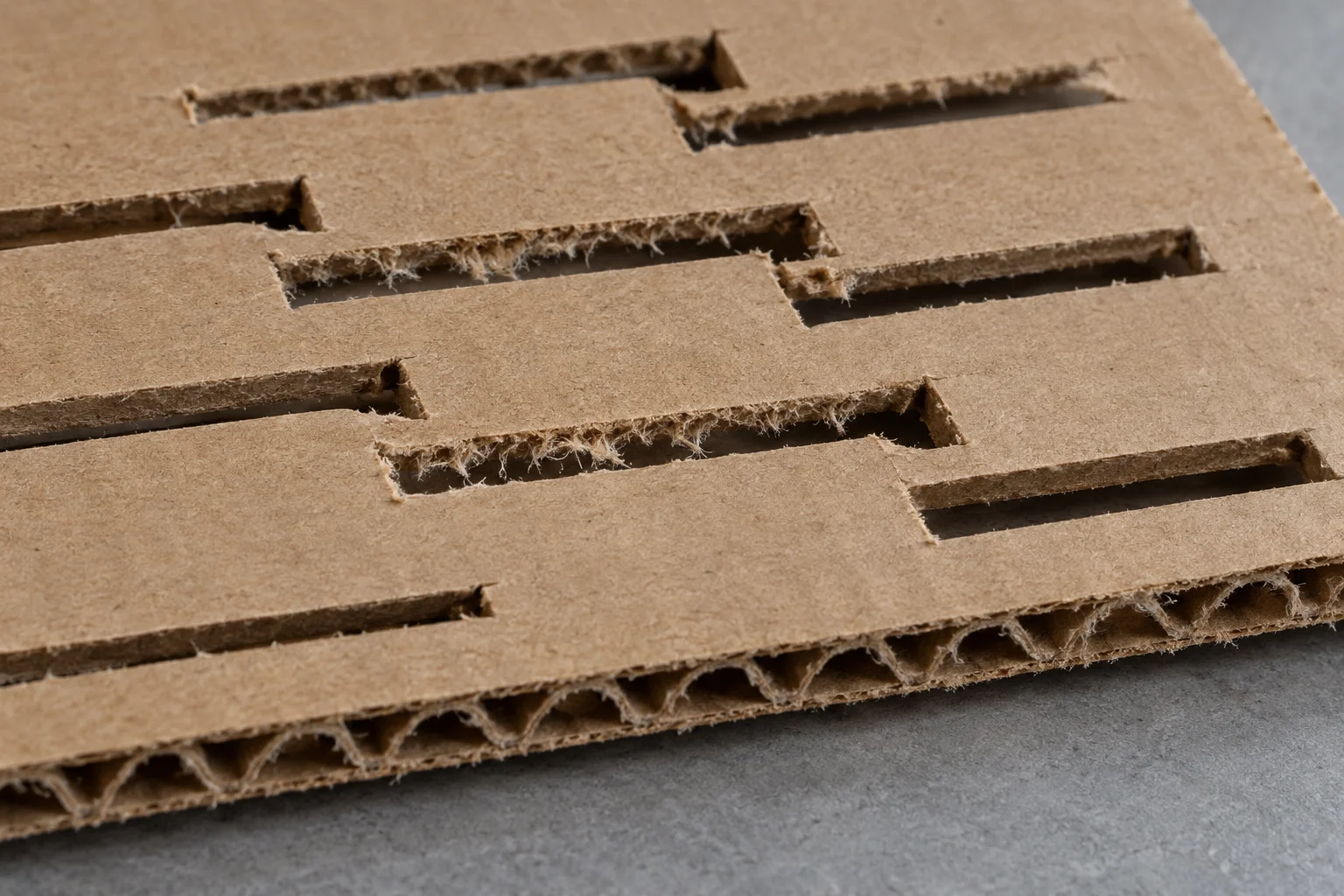
Examine where slits form, where opening is restricted and where fibers remain attached to cut edges. Record whether the change appears across the sheet or in a recurring area. Preserve the connections that belong to the intended mat pattern; cutting every connection would turn a connected cushion into separate pieces.
| Observation | What to consider | Useful next action |
|---|---|---|
| More fiber fuzz or ragged cut edges | Edge condition, feed changes and the installed cutter’s setup | Keep a sample and note the location. Have service inspect the relevant edge and settings. |
| Mat opens unevenly or some intended slits remain incomplete | Board condition, presentation, output mode or cutter condition | Compare with the accepted sample. Mark affected areas without assigning a gap fault from appearance alone. |
| Current rises during comparable feeding | Greater cutting load, changed feed or equipment condition | Record feed conditions and available no-load and feeding readings for service assessment. |
| Repeated overload or thermal indication | Excess feed or another unresolved fault | Follow the model’s fault instructions; escalate recurrence rather than repeatedly forcing operation. |
| Visible damage to the cutter | A component requiring inspection against its damage criteria | Stop and isolate under the governing procedure; obtain an authorized service decision. |
The competing causes matter. In the Tidland manual’s section 9-7, fuzzy slit edges can involve a dull blade, worn cant components, a loose holder or incorrect setup. Those are rotary-shear checks, not a diagnosis of a perforator from its paper sample.
The Virtus L60/L85 manual, section 8.9.2, associates dull knives with reduced capacity, increased motor current, poorer cutting and material heating. Current is therefore useful supporting information, but it must travel with the operating conditions. Collect readings from installed indicators or have qualified personnel obtain them using approved methods; do not open electrical equipment to complete the worksheet. A rise in no-load current belongs in the handoff too, because feed resistance alone cannot explain it.
Also separate cutter protection from finished-pad handling. The intimus PacMaster S manual, English page 4, calls for removing metal clips and staples because they can injure people handling the pads. Apply the installed machine’s material restrictions and the packing operation’s handling requirements together.
Use a documented wear limit to decide replacement
Stopping, inspecting and replacing are different decisions. Damage or improper operation can justify stopping immediately, while the choice to adjust, repair or replace follows the installed assembly’s service criteria.
The HSM ProfiPack P425 instructions (02/2020), English section 2, require switching off and disconnecting in the event of damage or improper operation. They reserve service work for HSM customer service and its contract-partner service engineers. Section 7 distinguishes excessive cardboard thickness and overload, and directs persistent faults to service. Use the corresponding instructions and isolation procedure for the machine on your floor.
A genuine dimensional wear limit identifies both the component and the reason for the boundary. In section 8-9 of the Maxcess/Tidland Control Series Knifeholder manual, document MI 270015467 1 D, Maxcess recommends changing blades when they reach these minimum diameters:
| Holder class | Minimum blade diameter | Purpose of the limit |
|---|---|---|
| Control Series Class II | 145.58 mm | Maintain the specified relationship between the blade edge and cartridge guard |
| Control Series Class III | 196.96 mm | Maintain the specified relationship between the blade edge and cartridge guard |
For these holders, reaching the listed minimum calls for a blade change even if the edge can still cut. These are limits for the named rotary-shear components. A cardboard perforator needs the permissible dimensions and damage criteria for its own cutting assembly.
Damage can also rule out reuse. The Virtus L60/L85 manual, section 8.9.9, prohibits reusing knives with grinding cracks. Indexing, sharpening and replacement are governed by the particular knife design and service instructions. A permitted operation on a replaceable rotor knife does not establish an approved repair for a perforating roller.
Release the machine only after the prescribed service and return-to-operation checks. Retain the resulting output sample and the service disposition so the next inspection has a useful reference.
Make the service handoff specific to the blades
Send observations, component identity and applicable criteria together. This lets service distinguish a feed problem from a cutter setting, a damaged part or another equipment fault.
Download the blade-condition record (CSV). It includes separate entries for operating observations and authorized service measurements, with space for the following:
| Record group | What to capture |
|---|---|
| Machine and assembly | Model, serial number, cutter/knife part number, manual and drawing revision |
| Feed and output | Board construction and condition, feed arrangement, mode, accepted/current sample references and defect location |
| Edge and setup | Observed damage, metal burrs, measurement location and method, actual value and units, applicable limit |
| Operating indications | Installed-indicator or qualified-personnel readings at no load and comparable feed; exact fault indication |
| Service disposition | Cause established, work completed, final measurements, replacement part reference and authorized return-to-operation checks |
Keep blanks for observations that have not been made; zero is a measurement. The technician completes internal inspection and measurement fields under the machine’s service procedure. Link this record to the maintenance and jam log when repeated stoppages are involved, so cutter work and operating events remain traceable without treating every jam as blade wear.